TAMM — Government Citizen Portal
Modernising Abu Dhabi's citizen services through the TAMM initiative
Client

End Client

Location
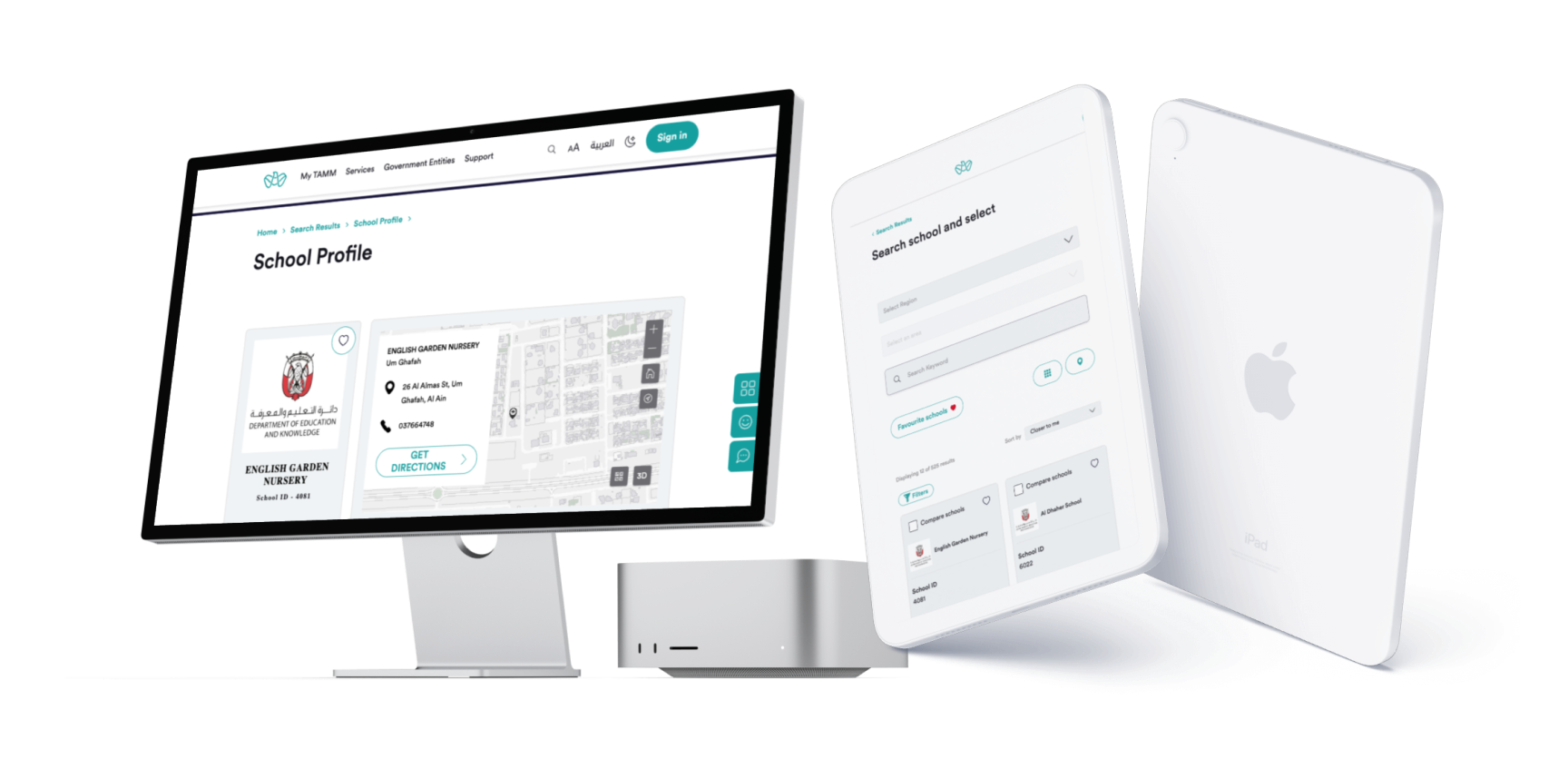
Eight UX teams were developing components independently. The Design Language System had become convoluted with redundant and inconsistent components.
As part of the IBM iX team in Dubai, I played a pivotal role in modernising Abu Dhabi's citizen services through the TAMM initiative — fixing the fractured Design Language System and delivering a School Finder tool.
What I Delivered
Three contributions across design systems, product design, and the broader citizen portal.
Design Language System
The Design Language System had become unmanageable. Eight UX teams were creating components independently, and the system was full of redundancy.
IBM assigned two designers to work on various sections of the TAMM site — business applications, visas, employment, education. Each team wireframed their own journeys. Above them, the UI and Design System teams received these wireframes and built components. The problem: the DLS quickly became convoluted due to diverse personalised styles across all eight teams.
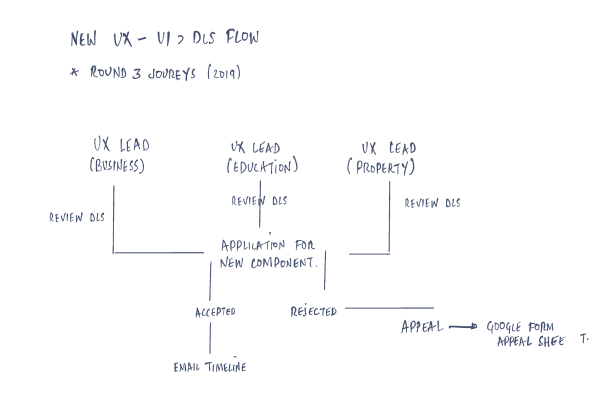
The diagram illustrates how multiple UX teams were feeding inconsistent component requests to the UI team — creating duplication and slowing delivery across the entire project.
New Operational Processes
I introduced a formal application process for new components. All UX Design Leads were required to review the existing DLS before requesting anything new.
The UI team would evaluate each request — confirming whether the component already existed or genuinely needed to be created. Rejections were returned with suggested alternatives, and disputes were escalated to management for final decisions.
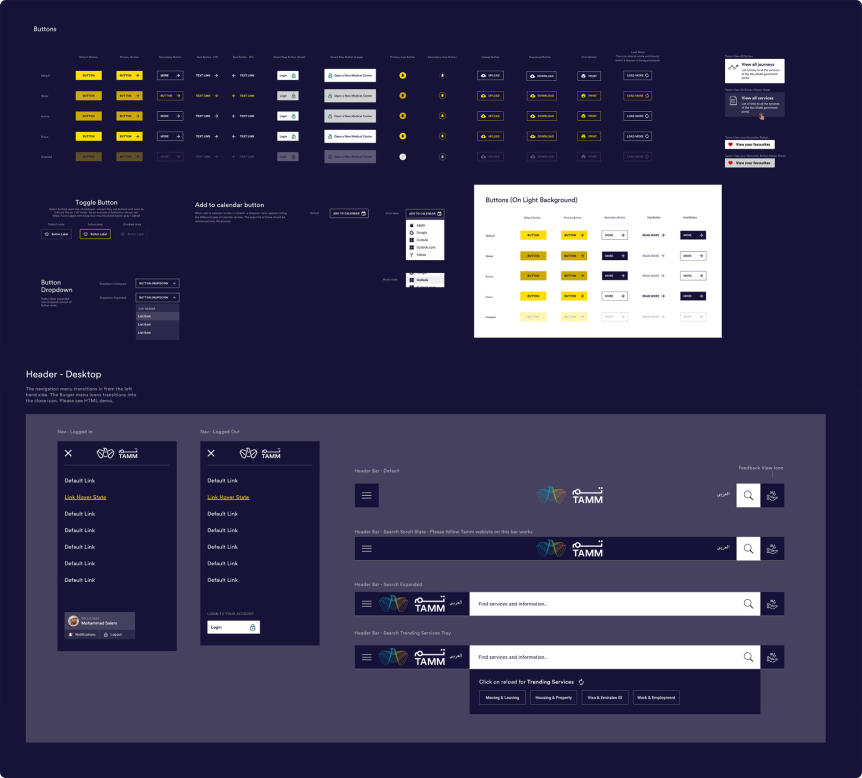
Atomic Design
While the new processes improved workflow, we still found irregularities — new components being developed simultaneously with overlapping functions.
I implemented Atomic Design methodology, breaking all components into fundamental elements. This maintained consistency and accelerated assembly of new components. We split the team: one group developed new components, while the other deconstructed older components and rebuilt them using the atomic structure. The result was profoundly successful — the atomic design approach is still in use at TAMM today.
School Finder
A tool to revolutionise school discovery for families in Abu Dhabi — serving both expatriates and Emiratis with an intuitive, comprehensive digital experience.
Finding the right school is one of the most complex decisions families face. The existing process was fragmented and time-consuming. We set out to simplify it — making school selection accessible and user-friendly for all families in Abu Dhabi.
Research & Discovery
Through ethnographic studies, user interviews, and surveys distributed via government channels, we gathered extensive data on parent preferences and concerns.
From this research, we developed prototype personas and identified the critical factors that influence school choice.
Information Architecture
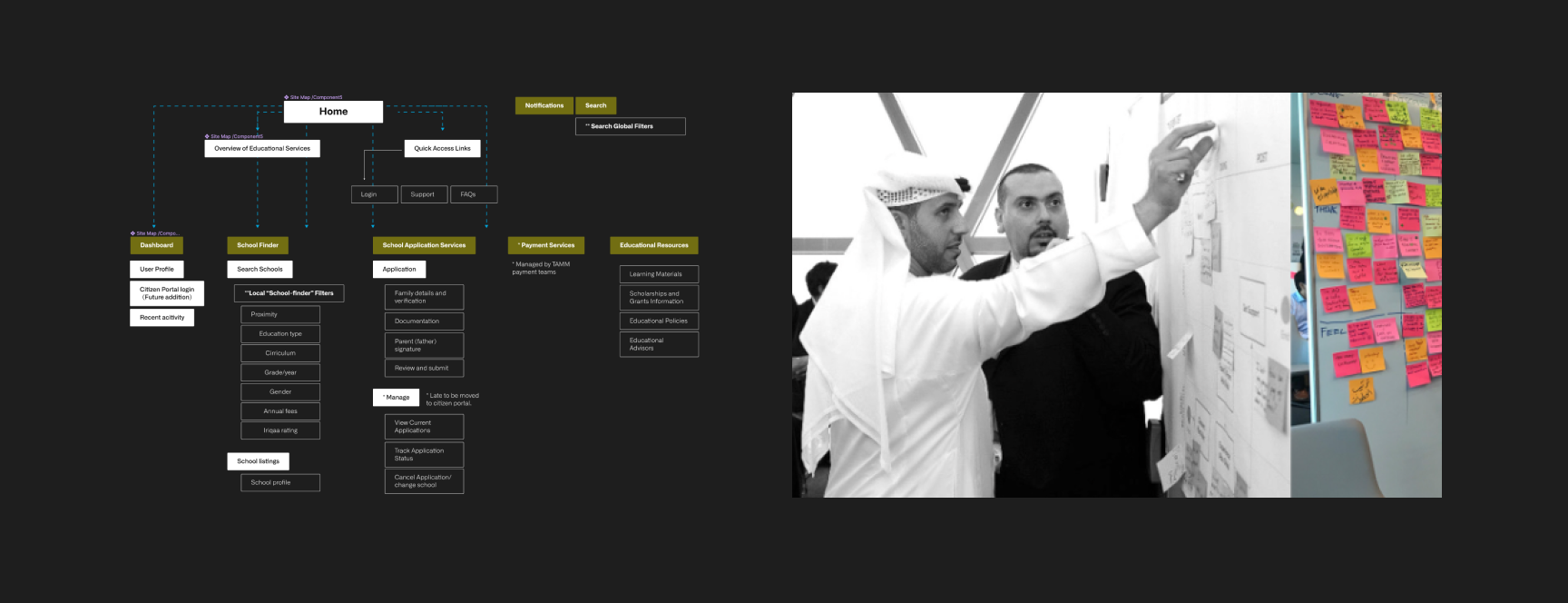
The sitemap structures the school application portal — guiding users through educational services, profile management, application processes, payment, and additional resources. Each section provides intuitive access to necessary services for both expats and Emiratis.
User Testing
Testing sessions ran throughout wireframing and interface design. Each sprint cycle allocated several days to user testing.
3-5 users engaged with prototypes in controlled environments, providing feedback that was synthesised and communicated to stakeholders. Identified issues were added directly to the sprint backlog.
Final Screens
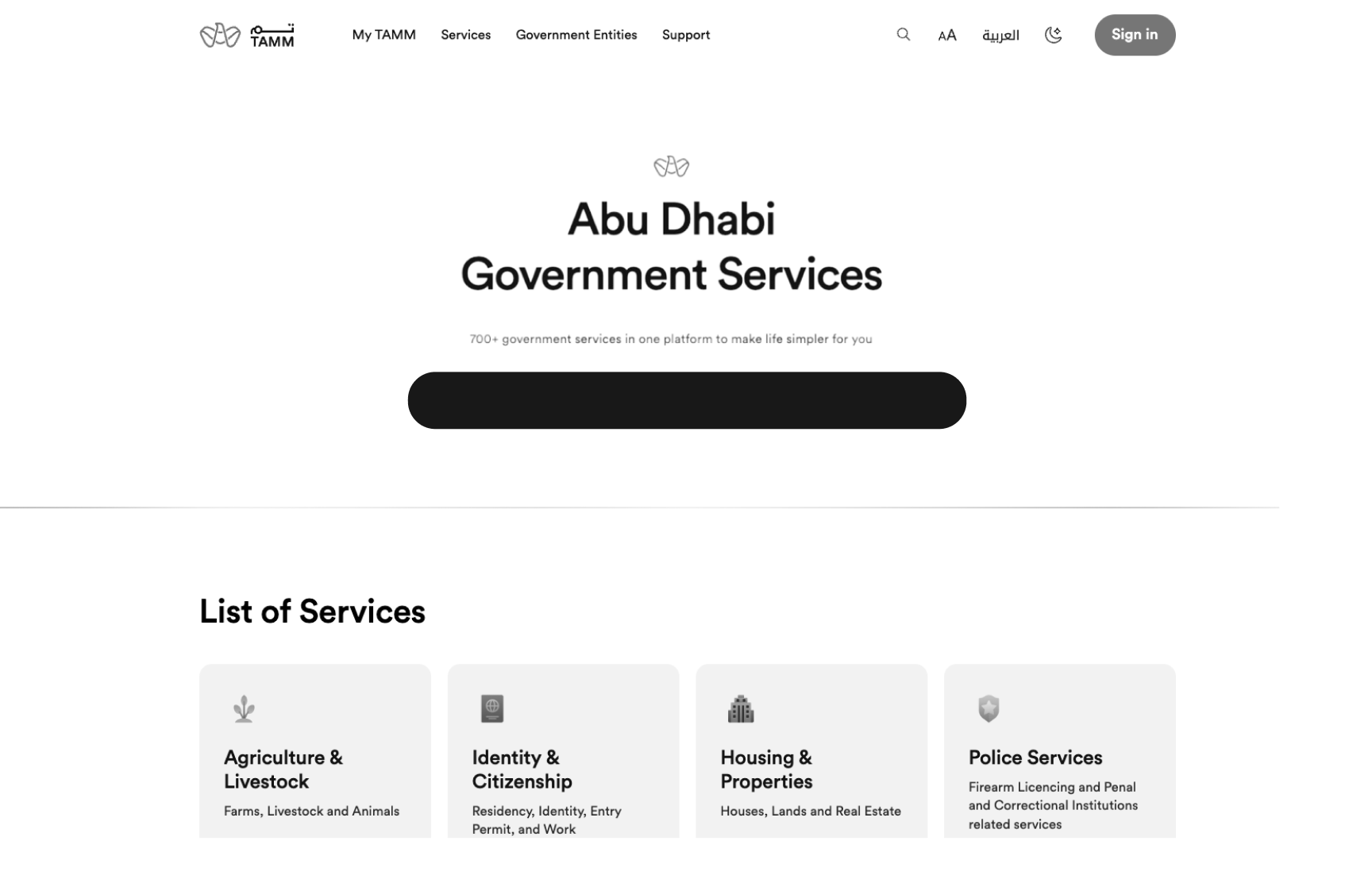
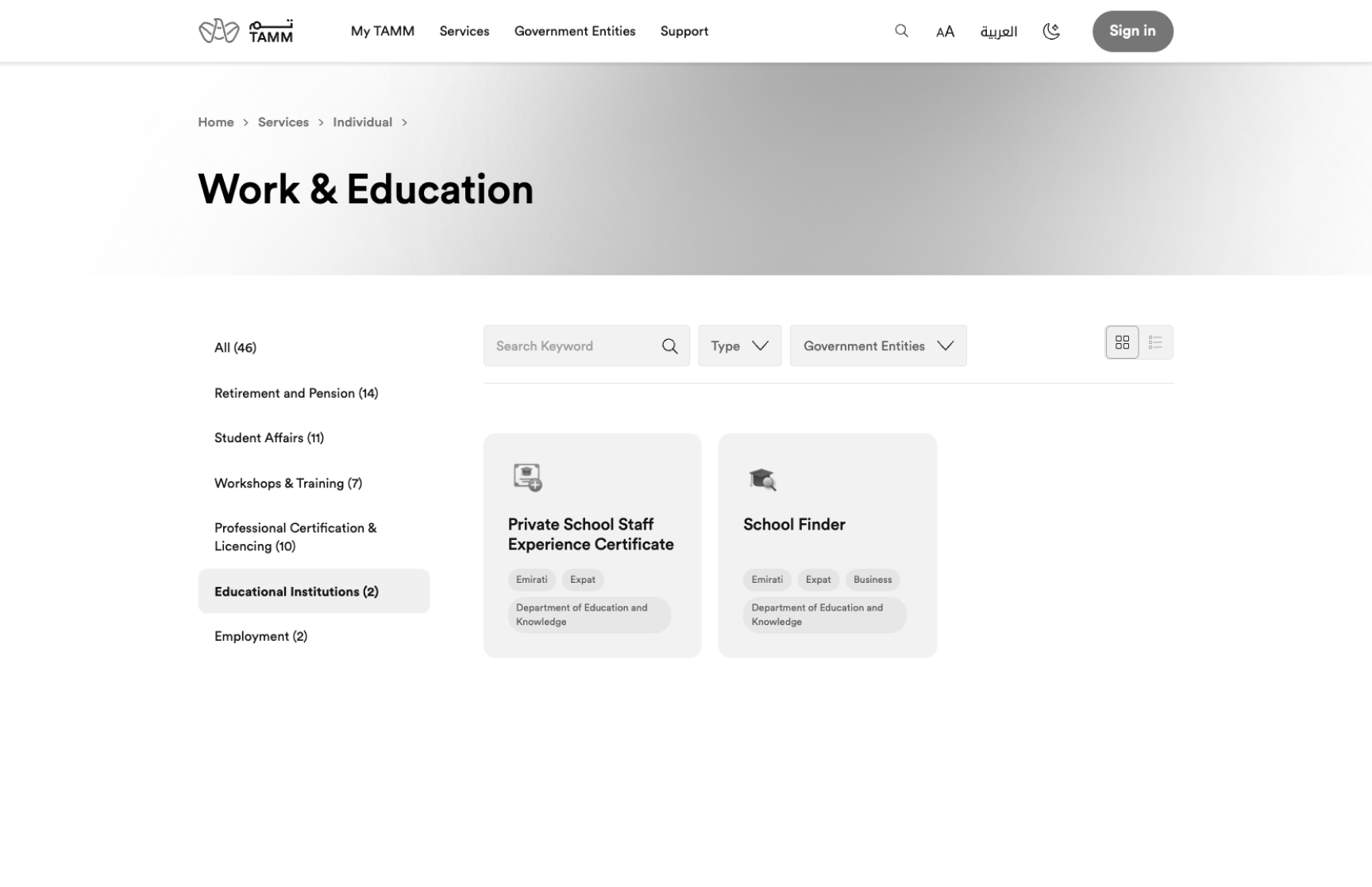
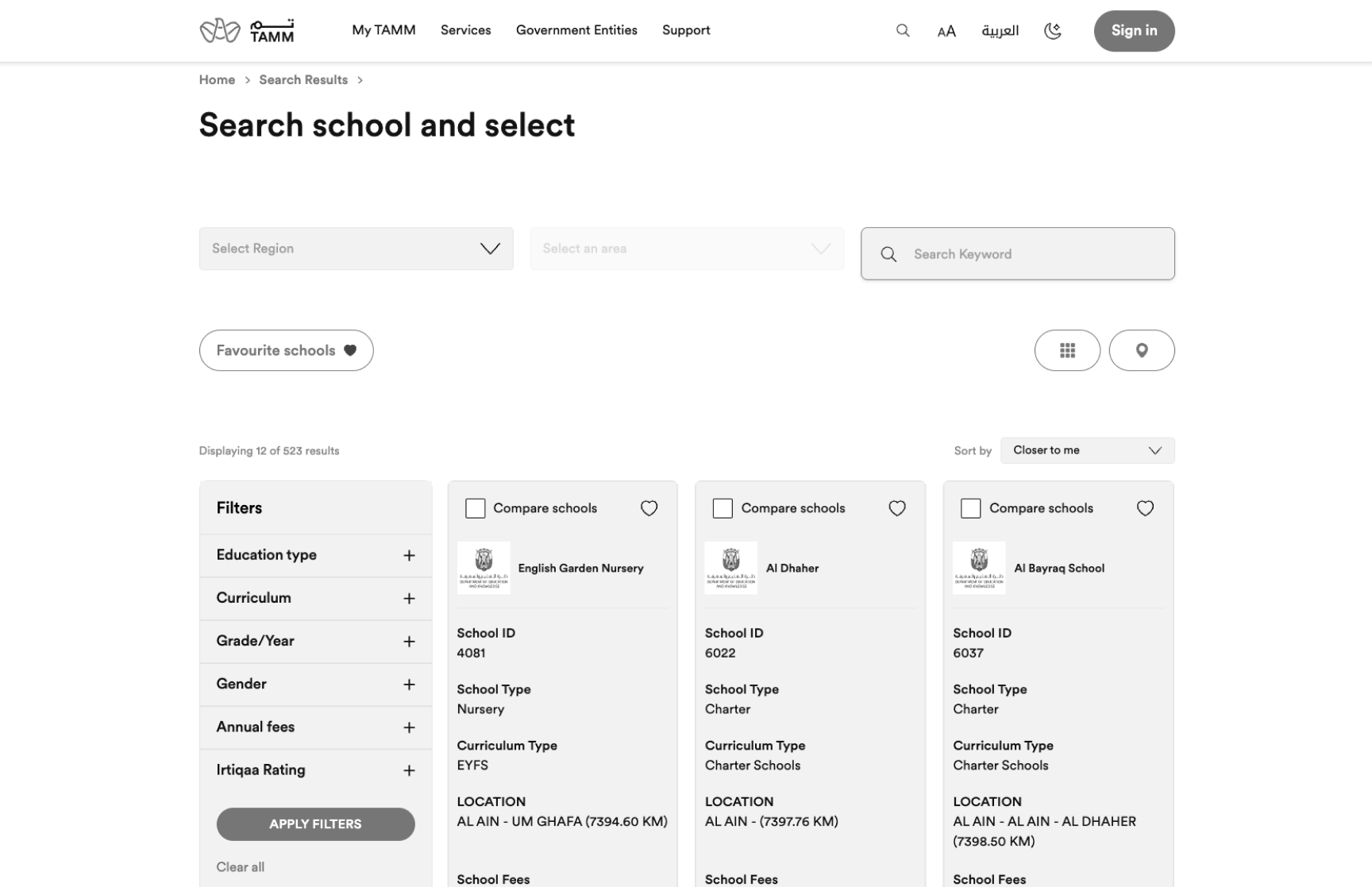
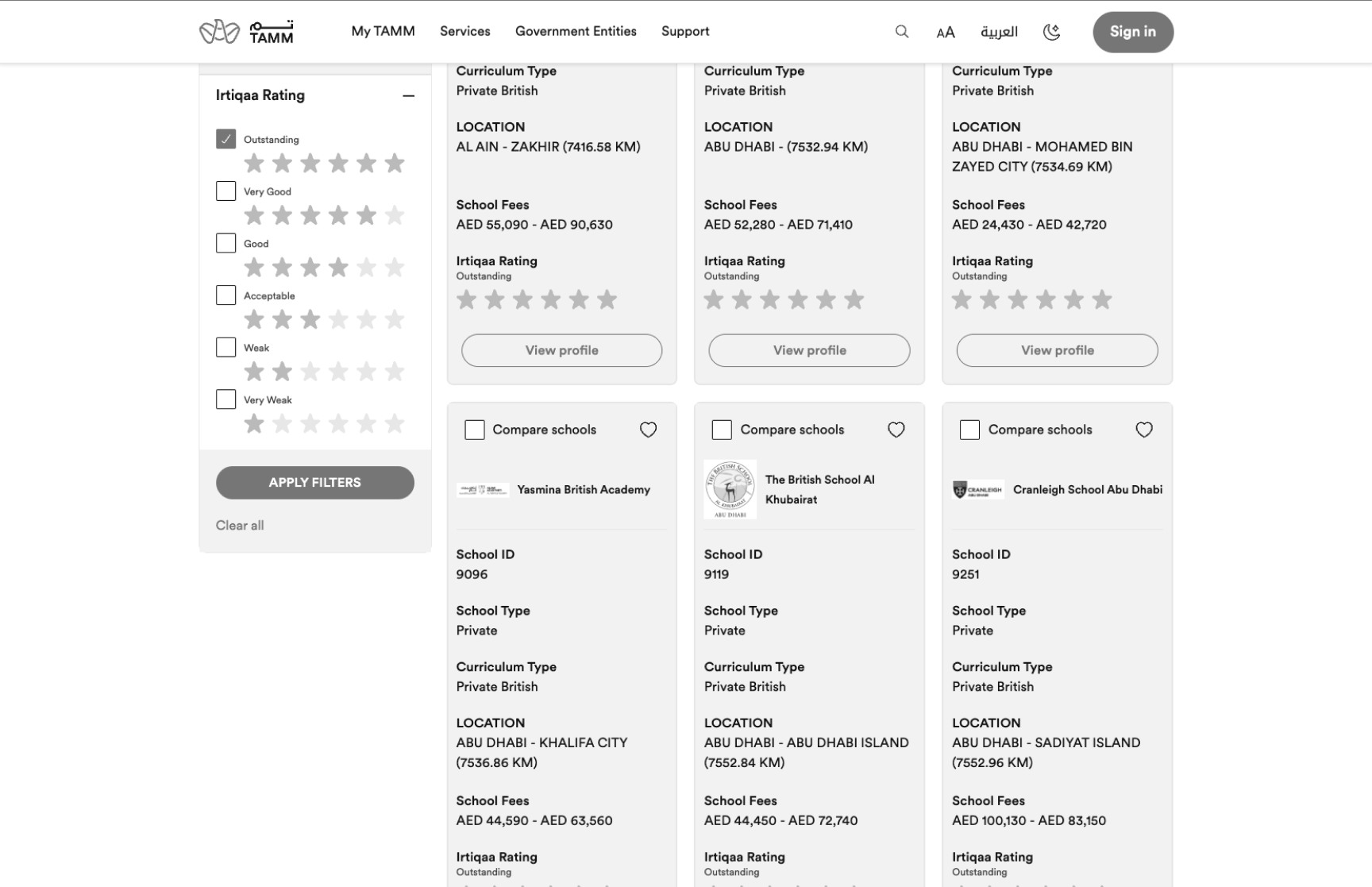
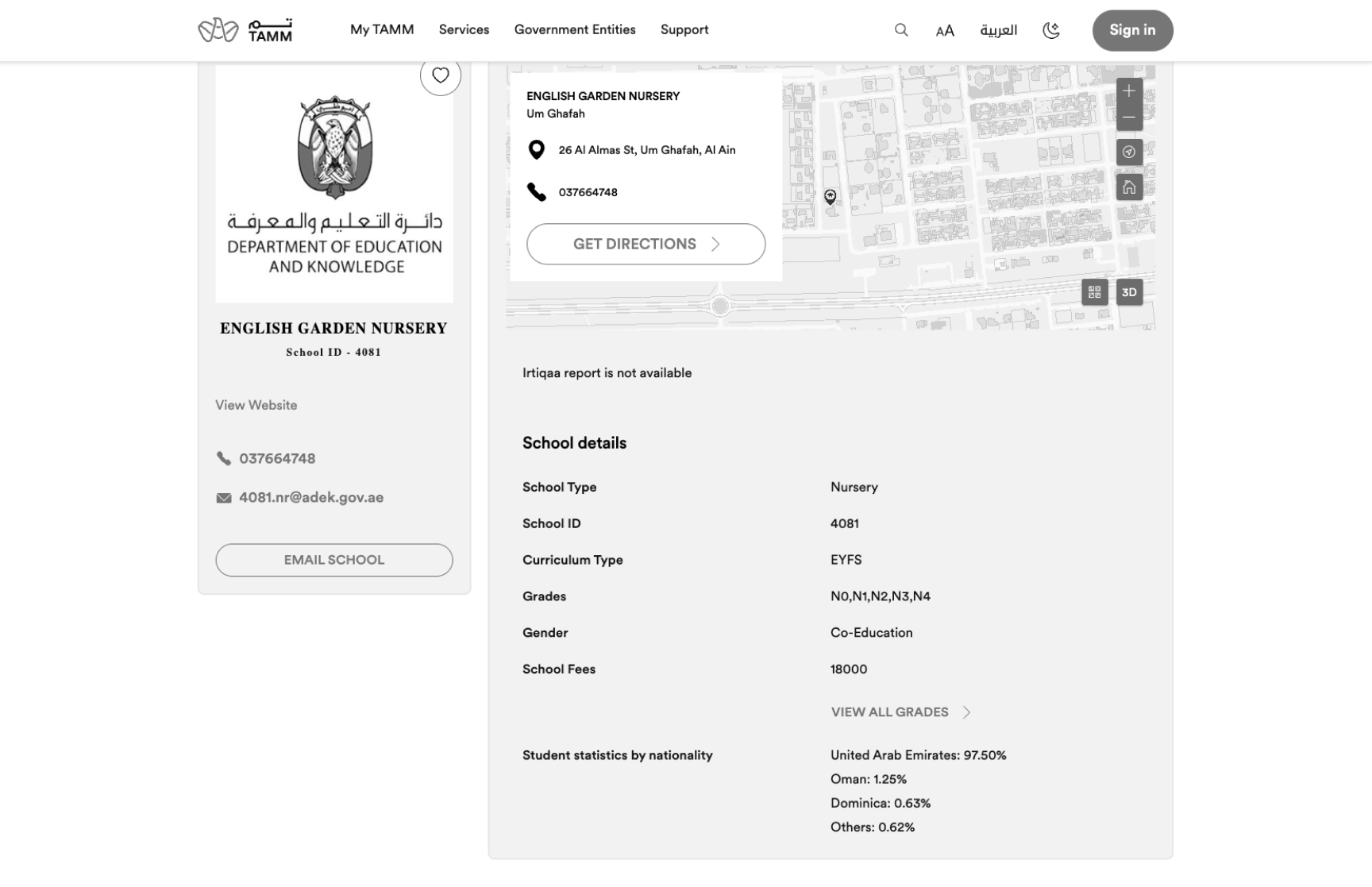
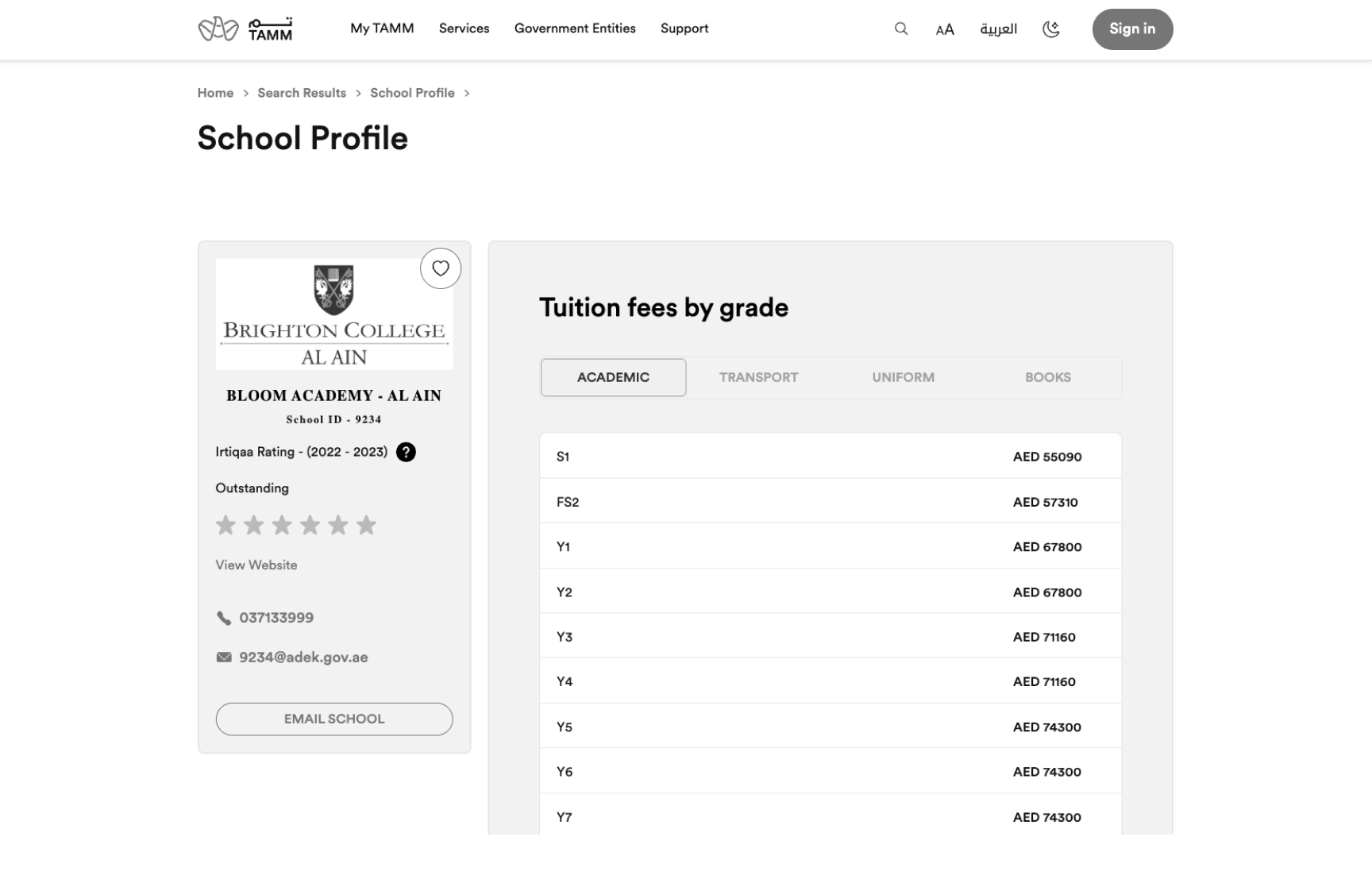
TAMM Portal
The global TAMM interface — Abu Dhabi's everything app connecting citizens to all government services
Impact
The School Finder tool significantly reduced the time and effort required by parents — and contributed to broader recognition for Abu Dhabi's digital transformation.
Awards & Recognition
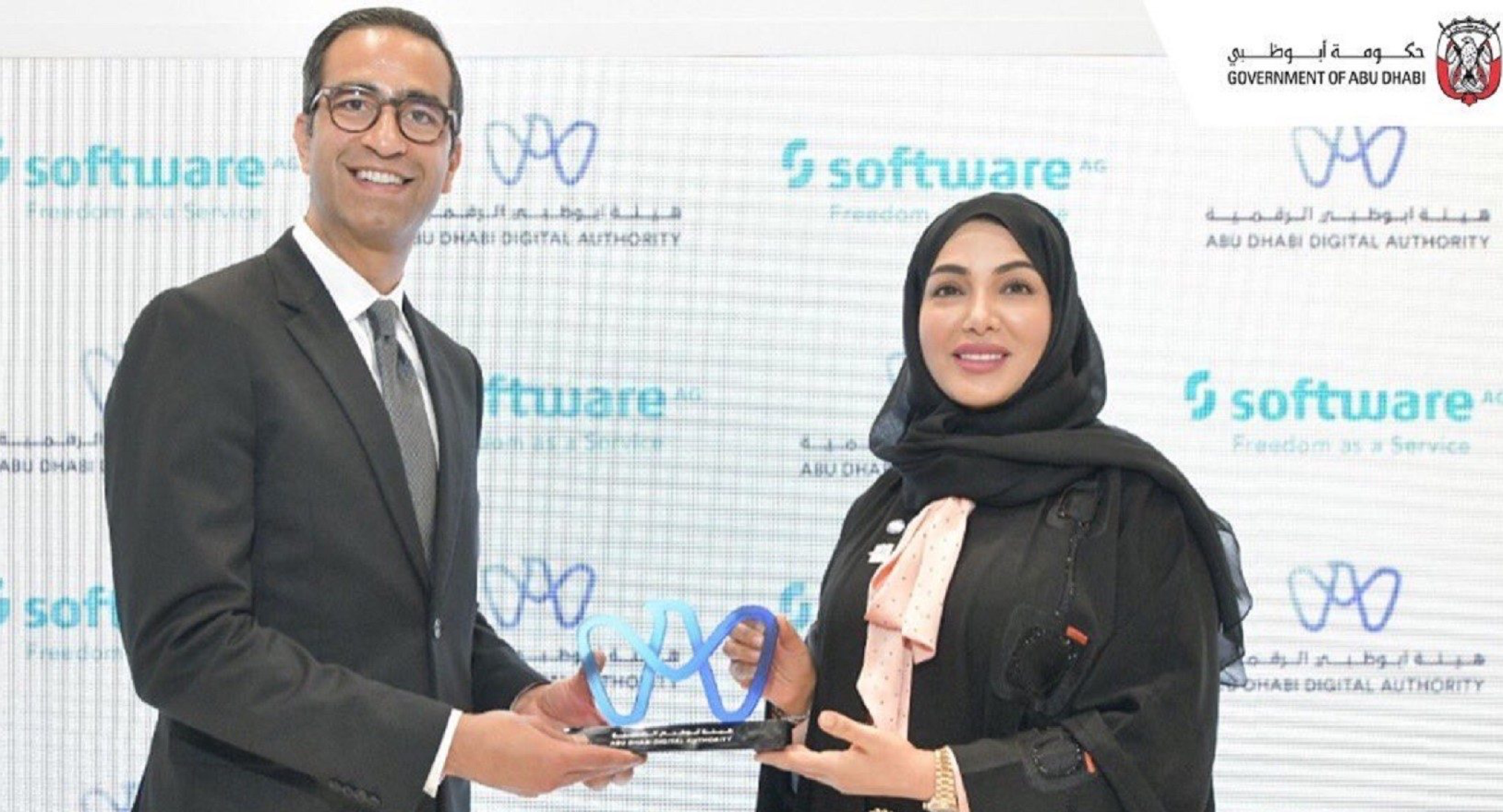
In 2019, the Abu Dhabi Digital Authority received the "Innovation in API Management" award by Software AG.
This accolade celebrates TAMM's significant role in enhancing the delivery of government services through a single, comprehensive portal, marking a key milestone in Abu Dhabi's digital transformation journey.
Takeaways
Global Collaboration
Working with a diverse international team introduced complexities — language barriers, cultural differences, distributed time zones. The experience highlighted the necessity of maintaining a clear and universal design language that accommodates global standards, ensuring all team members could collaborate effectively regardless of location.
Inter-Agency Coordination
The project's scale required coordination across multiple government agencies — demanding rigorous organisation and flexible planning. Staying adaptable was crucial to assimilate a wide range of insights, which was essential for making informed decisions that served a broad spectrum of needs.
The Value of Patience
In large-scale government projects, patience is critical. It's vital to allow the project to evolve at its own pace and avoid rushed decisions influenced by internal or external pressures. Regularly stepping back to view the project holistically helps identify where real impact is being made.
Efficiency in Process Management
Engaging with the Design Language System taught the importance of a lean approach. It's important to periodically reassess goals and methods to ensure they remain effective under the pressures of high-stakes government projects. Setting aside time each week to plan and evaluate progress is essential for meeting deadlines and maintaining quality.
Like what you see? Let's discuss your project.
© 2026 David Quill
Privacy & Terms